It must have been quite inconvenient that HR staff couldn't access HR data directly.
That's right. To check HR data we always needed IT's support, and even basic tasks like personnel changes or code creation had to go through an IT manager. It got even more complicated whenever regulations changed—we had to explain the changes to IT, discuss how to build them, and then wait for the actual implementation, over and over. As a result, timely updates were difficult and errors were frequent. Above all, the worry that personnel information could be exposed to other departments was a constant obstacle. Annual leave was granted through Excel, and leave-usage notices were printed, distributed, and collected on paper—so as manual work piled up, the risk of human error rose along with it.
When you first decided to adopt a solution and ultimately chose JaDE, what was the decisive reason?
Two factors drove the decision. The first was security. In a situation where HR needed an environment it could control directly as the owner of the data, JaDE's proven security framework became the basis for internal buy-in. The second was a system suited to the Korean HR environment. Global solutions struggle to implement Korea's complex attendance and labor laws or its uniquely Korean benefits programs. JaDE bridged that gap with configuration features optimized for Korean HR practice.
Day-to-day attendance management changed a lot after adopting JaDE, too.
The biggest change is that we now have a monthly-close concept. Before, if someone retroactively filed overtime from two or three months earlier, the payroll manager had to keep reviewing and comparing it. Now everything is handled cleanly on a monthly-close basis, so it's much clearer. Annual leave grants changed enormously as well. We used to do all the Excel work one by one; now a single click grants it for everyone at once. The leave-usage process is even more dramatic—before, we printed and handed out notices to every employee, collected them back, and checked who had submitted them. It was all manual.
Beyond simply reducing manual work, has your way of working changed?
Manual work being cumbersome is one thing, but the bigger problem is that no matter how careful you are, human error is unavoidable. That kept everyone so tense during the work that the same task piled on more fatigue and took more time. And from HR's perspective it's one error among hundreds of people, but from the individual's perspective it feels as if their entire record is wrong. Reducing errors ultimately became an experience that led employees to trust HR more.
| Before (in-house system) | After |
| IT team support needed to view HR data | HR staff manage and view data directly |
| Code creation & personnel changes also required IT support | HR staff handle code creation & personnel changes directly |
| On legal changes: explain to IT → discuss → wait for implementation | Automatic legal patches, applied immediately |
| Leave grants & usage entirely manual (Excel & paper) | One click grants leave for all employees automatically |
| Concerns over HR data security | HR data thoroughly protected via 2FA & security testing |
The changes in cost and staffing must be significant too.
By moving to JaDE we consolidated our systems, which cut actual costs by about 80%. We also had an IT staffer supporting the HR system, and roughly half of their work was effectively HR-system related. For the company, that person can now focus fully on other work—so we've also gained the efficiency of about 0.5 FTE. And it's not as though HR's workload increased much; with less manual work, we actually manage things more efficiently.
When you announced you were replacing a long-used HR system, how did employees react?
Of course, at first there were reactions like, "We were used to it—why change it?" But once they actually used it, nothing became more inconvenient; if anything, more people found it easier now that forms previously handled on paper had come into the system. With a single HR link, they can check HR information, applications, and benefits all at once. On our side, the burden of keeping hard copies dropped noticeably. On security as well, people initially found two-factor authentication cumbersome, but after personal-data breaches became a hot issue, they began saying, "I'm so glad we have 2FA."
Any memorable episodes during implementation or later maintenance?
Once, while working, an entire month's worth of crucial data was wiped out. It was a very alarming situation, but the JaDE manager stayed up all night helping us recover the data. It really brought home how quickly and diligently they respond when an unexpected issue arises. They also helped a great deal when migrating data accumulated over a long time in the old system, which made it much easier to settle in.
I hear you're also actively using custom-built application forms.
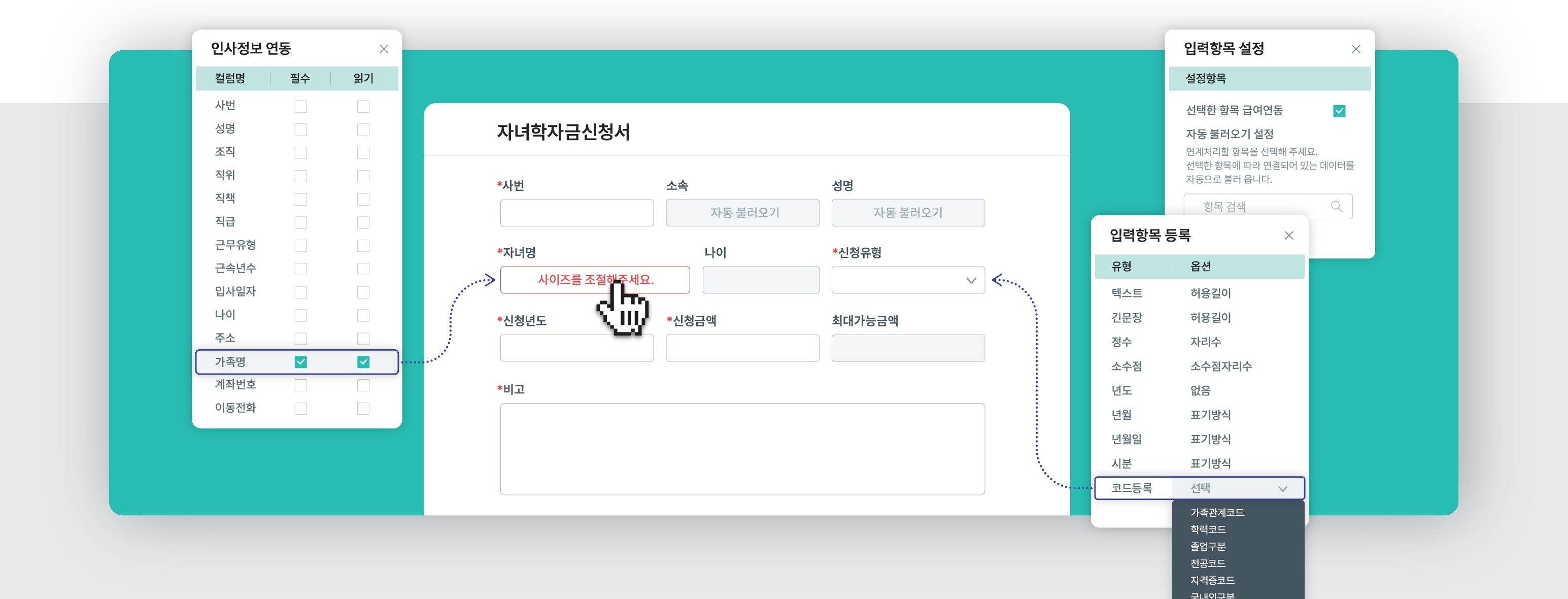
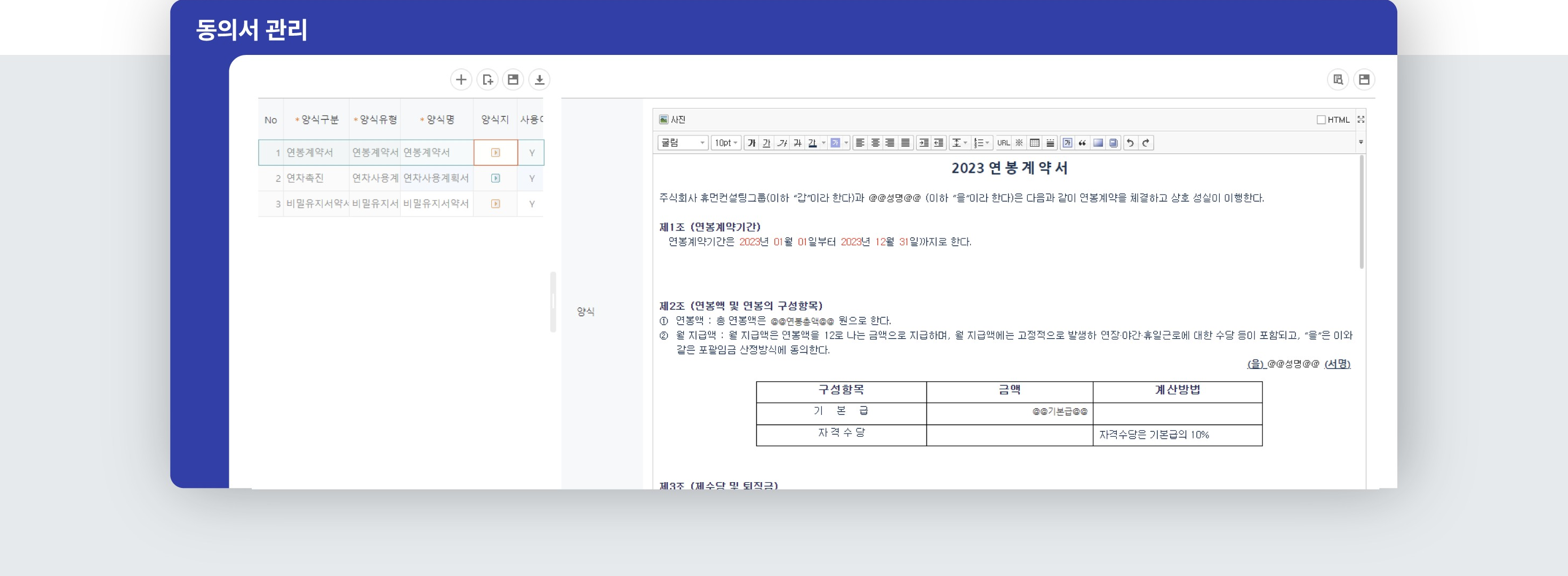
Yes. We have several custom forms—company-specific benefits applications, allowance requests with evidence processing, and more. Documents that don't require complex calculations also came into the system as custom forms. Thanks to that, the burden of keeping hard-copy documents naturally decreased.
After adopting JaDE, what operational know-how should an HR manager have?
Since patches arrive every month, the habit of carefully reviewing what's been updated is really important. Looking at the patch notes, you'll spot something and think, "Ah, this feature probably came from another client's request"—and sometimes it fits us perfectly too. If you just use it as-is, you end up leveraging less than half of the features. It's also important to actively submit requests to the help desk when you need a feature. In fact, I requested an attachment feature during the approval flow, and it was implemented. Any manager with the mindset of building the system together with JaDE will be able to make great use of it.